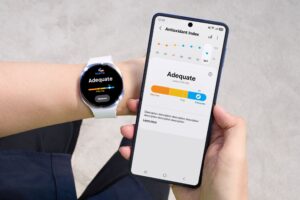
It started with a simple question: What if you could measure your nutrition in real-time, right from your wrist?
Bengaluru : Samsung’s Antioxidant Index on Galaxy Watch8 transforms what once seemed like science fiction into everyday technology. In five seconds, a thumb scan returns precise carotenoid levels – the industry’s first measurable nutrition index. By miniaturizing lab-grade sensor technology with exceptional accuracy, it turns your diet into an actionable metric for healthier aging. Establishing this new benchmark in wearable health tracking required years of intensive R&D, countless prototypes and unwavering grit.
Breaking New Ground in Nutrition Tracking
Back in 2018, Samsung saw a critical gap in wearables: we could count every step and calorie, yet there was no simple way to measure how our diet impacted our health. Deeper nutritional insights were locked behind expensive and time-consuming lab tests, out of reach for many people. As people live longer, the focus is shifting from simply increasing lifespan to improving the quality of those additional years.
“In this context, antioxidation naturally gains attention as a method to slow down aging,” explains Dr. Hyojee Joung, a Seoul National University[1] public health nutrition expert who guided parts of the tech’s development. “If antioxidant management is neglected, Reactive Oxygen Species (ROS) accumulate in the body, increasing the risk of chronic diseases such as cardiovascular disease, diabetes and cancer.”
This realization made antioxidants the cornerstone of Samsung’s mission. Engineers and scientists focused on carotenoids – key antioxidants and proven indicators of fruit and vegetable intake – to create a device small enough to sit on your wrist, yet powerful enough to turn complex antioxidant data into simple, actionable health insights for everyone.
Challenge #1: How to Shrink the Lab-Grade Sensor Technology
From day one, the dream of a nutrition-tracking wearable hit an immediate snag: traditional methods for measuring carotenoid levels like Raman spectroscopy are laser-based, non-invasive and precise, but rely on bulky machines that are far from wearable. So, the team’s first mission was to shrink the lab-grade tech into a coin-sized sensor.
After seven years of rigorous testing and optimizing since the first prototype, the team developed the miniaturized sensor, a groundbreaking tech that combines multi-wavelength LEDs with a custom photodetector array to provide accurate carotenoid readings in a compact design.
“Our breakthrough was integrating reflectance spectroscopy with LEDs, which allowed us to miniaturize the technology while maintaining a high level of accuracy,” explains Jinyoung Park, a developer from Digital Health team at Samsung Electronics.
Challenge #2: How to Ensure the Tech Reaches Everyone
Creating a coin-sized carotenoid sensor was a major milestone, but the next challenge was ensuring it could work accurately and reliably across diverse skin types, making it truly accessible to everyone.
To overcome challenges like melanin interference in darker skin tones, Samsung’s engineers opted to use the fingertip for measurements since it has the least melanin across all ethnic groups. They also added simple tweaks, like light fingertip pressure during scans, which helps temporarily reduce blood flow and hemoglobin interference, making the results more accurate.
Extensive trials conducted at Samsung Medical Center[2] included hundreds of participants, validating the sensor’s performance. This paved the way for a feature that seamlessly transitioned from the lab to users worldwide, offering an inclusive solution designed for everyday life.
[1] Seoul National University is a leading academic institution in South Korea.
[2] Samsung Medical Center in Seoul, South Korea, is a leading medical institution known for its patient-centered care, advanced medical technologies, and specialized centers such as the Comprehensive Cancer and Proton Therapy Centers.